Saturday, 14 July 2012

Is India A Secular State? Why No


secular+india Why India Is Not A Secular State
The world community has rightly regarded Pakistan and Bangladesh as examples of theocratic states practicing policies of harsh discrimination against Hindus and other minorities.

Sri Lanka’s Singhala-centric policies have generated gross discrimination against its Tamil citizens. Beyond India’s South Asian neighbourhood, numerous Islamic states such as Afghanistan and Saudi Arabia follow unjust policies toward minorities of all kinds that are an affront to civilized values everywhere and at all times. India in contrast is seen as a shining example of a secular state.
With the Republic Day just gone by, it is time to ask: But is India really a secular state?
I do not think so.
Political secularism may be defined as the separation of religious activities from those of the state, customarily referred to as “the separation of church and state” in the west. Secularism in theory then would mean that religion and state cannot occupy the same space. The state in its governmental capacity does not promote any religion or religious group, nor does it intervene in religious affairs. It cannot even be involved in interpretation or “reform” of any religion much less favour one over any other. This model of secularism may be characterized as maximum separation between state and religion except on manifest grounds of morality, health, and public order. Theoretical formulation, interpretation, and implementation of secularism have varied in several countries. In Indian context, the votaries of Hindutva equate it with appeasement of minorities, thus “pseudo-secularism.” Apologists of Indian secularism call it “religious equi-distance, not non-involvement,” meaning that Indian state is neutral between religions and religious communities.                      
        

I demonstrate that in practice, Indian state actually privileges Hinduism over other religions and religious communities. The Indian state is in fact the defender of the dharma for the following five reasons.
1: Constitutional Discrimination
Article 25 (2) of the constitution calls for providing “social welfare and reform and throwing open of Hindu religious institutions of public character to all classes and sections of Hindus.” India’s constitution does not define who or what is a Hindu, but it defines followers of Buddhism, Jainism and Sikhism as Hindus for purposes of Hindu temple entry. Article 25 (2) (b) (Explanation II) states: “the reference to Hindus shall be construed as including a reference to persons professing the Sikh, Jaina or Buddhist religion…”
                         
Isn’t this the concern of Brahmin establishment to allow or disallow whoever they deem fit to enter a temple? Why should a secular state be concerned with the social welfare of only one religion? The motive of the constitution writers was obvious: to prevent the conversion of Dalits to Christianity or Islam, to “reform” Hinduism to make it palatable to the former untouchables.
                  
The Hindu Marriage Act of 1955 applies to
(a) any person who is a Hindu by religion in any of its forms and developments, including a Virashaiva, a Lingayat or follower of the Brahmo, Prarthana or Arya Samaj;
(b) to any person who is a Buddhist, Jain or Sikh by religion, and
(c) to any person domiciled in the territories who is not a Muslim, Christian, Parsi or Jew by religion.
In other words, legally there is no such thing as a Buddhist, Jain, or Sikh marriage, which is another attempt to deny other religions a distinctive identity and absorb them in the Hindu fold. The Office of the Registrar General that conducts the decennial census enumerates anyone who is not a Christian, Muslim or Parsi as Hindu, most particularly in tribal areas, in pursuance of a policy of Hindu by default to inflate the religious majority.
  
Article 290A of the Constitution, which was added in 1956, provides for Kerala state funds to be paid for the upkeep of Hindu temples and shrines in the territories of former princely state of Tranvancore. What state but a denominational one would spend government funds to promote a particular religion?
[As an aside, a forest has been destroyed in arguing for a uniform civil code as opposed to Muslim Personal Law and the issue of Haj subsidy. But perhaps I can save those issues for a full discussion at a different time]
2: Legislative Discrimination
Although freedom of religion is granted under the constitution’s Article 25 (1), a Congress government of Madhya Pradesh pioneered anti-conversion legislation during the heyday of Nehru in 1954. Since then as many as 7 state legislatures (Arunachal, Chhattisgarh, Gujarat, Himachal, Orissa, Rajasthan and Tripura) have passed laws severely restricting conversion from Hinduism to other religions while facilitating conversion to Hinduism.
               
In 1982, when a few hundred Dalits embraced Islam in Meenakshipuram, the central government took measures to curb conversions. No less than Indira Gandhi characterized conversions as a threat to national security.
Christian missions and churches have been under attack since decades, often with state complicity as demonstrated in August-September 2008 in Orissa and Karnataka.
Hundreds of mosques are in illegal possession nationwide including in New Delhi, where scores are occupied by the central government.
It was a Congress government that first locked up the Babari Mosque in 1949 by court order effectively converting it into a Hindu temple. What began under Nehru was successfully completed by Narasimha Rao in 1992 through the Mosque’s destruction under the very nose of army, paramilitary and police. It is ironic that the Indian state is ready to deploy army to flush out Sikh insurgents from Golden Temple and Muslim rebels from Charar-i Sharif, but not protect Babari Mosque from the Hindu mobs’ jack hammers.
The states of Gujarat and UP spent government funds to rebuild the Somanatha Temple around the same time when Babari Mosque was locked up. It was President Rajendra Prasad who inaugurated the rebuilt temple in 1951 amidst official fanfare.
3: Employment Discrimination
Article 16 (2) of the constitution prohibits discrimination in public employment on religious grounds. Yet there are numerous examples of outright discrimination. Per Presidential orders of 1950 and 1956 the beneficiaries of Scheduled Castes’ reservation can only be Hindus, Sikhs and Buddhists but not Christians and Muslims. If an SC changes religion after obtaining employment or admission to school, he or she must forfeit job and withdraw from school as has happened in numerous instances. But if the SC reverts to Hinduism, he or she can resume his/her status as an SC as courts have ruled.  
Discrimination in Army
Right after 1947, Kashmir’s predominantly Hindu army was absorbed in the national army; whereas Hyderabad’s largely Muslim army was disbanded, rendering nearly 20,000 jobless. The Indian army’s infantry regiments are still based on religion (Sikh regiments), or ethnicity (Gorkha) or caste (Rajput) or region (Garhwal) in which members of other faiths, ethnicities, and regions are barred.
   
While a bearded Sikh may become chief of the army staff as did Gen. J.J. Singh, a Muslim may not sport beard in any of the armed forces. Only Jhatka is served in army messes andlangers forcing Muslims to become vegetarian. A Hanuman temple greets visitors upon entering virtually every cantonment in the nation, hinting non-Hindus that they don’t belong there. In their public addresses to the soldiers and officers, at least two army chiefs—Generals B.C. Joshi and Shankar Roy Chowdhury—have used references to Hindu scriptures to the exclusion of the Quran and the Bible.
4: Cultural Discrimination
There are numerous examples where Hindu culture is conflated with Indian culture. The ban on cow slaughter deprived thousands of butchers their livelihood even as it stole millions of poor their only source of inexpensive protein. Cow may be sacred to the upper castes, but not so to the Christians, Dalits, and Muslims. Food taboos of some higher castes do not end at beef. Beyond beef, eggs may not be sold publicly by court order as it offends some caste sensibilities. Nor can school children bring food of their choice if it offends Hindus.
                             
Official functions of the government whether at the central or state levels often commence with Hindu ceremonies of lighting lamps, breaking coconuts, and recitation of slokas. There is no disapproval to the fact that functions of central and state ministries of education begin withSarasvati vandana .
In September 1993, Air India took delivery of a Boeing 747 in Seattle, Washington where the Ramakrishna Mission performed a puja invoking Lord Ganesha. Ministers lay foundation stones of government buildings preceded by bhoomi puja ceremony as if the state belongs only to Hindus. In Vishakhapatnam, I witnessed a ship launch amid saffron-robed, ashen facedsadhus singing bhajans, a function nearly mistaken as a Hindu festival.
In a trip to the United States in 1984, AP Chief Minister N.T. Ramarao found nothing objectionable in spending government funds for distributing medallions with Sri Venkateshwara’s image among potential investors in his state.
                
                                                           Hindu's Attack on Babri Mosque
A large stone image of a reclining Vishnu located at the entrance to the IGP’s headquarters in Bangalore is more fitting for a temple than a secular state’s police building. Almost every police thana in West Bengal has a Kali temple, none has a mosque in a state with nearly 30 percent Muslim population. Muslim police trainees in Andhra Pradesh,
                     
 
School children in Gujarat, Maharashtra and numerous other states have been forced to perform Surya namaskar against their will. Government school texts in Hindi and regional languages assume all pupils to be Hindu as the contents are soaked with idioms, phrases, signs, symbols, and icons of Hinduism to the exclusion of material from other religions and cultures. Textbooks of history and social studies are replete with gross distortions of Indian history of all eras, ancient, medieval and modern, in which Muslims and Christians are invariably the villains, traitors and foreiners. 
Until the advent of television in the 1980s, All India Radio was the main source of information and entertainment to middle classes. The government-controlled AIR began its programs withVande Mataram, Mangala dhwani, Vandana, and Hindu lyrics. Rarely did AIR broadcast anything pertaining to Christian or Muslim cultures. Like the AIR, during its heyday, seldom does Door Darshan show any serials of Muslim or Christian character. When it broadcasted serials of historical or literary figures—Tipu Sultan, Ghalib—they were caricatured into modern stock characters stripped of their distinctive cultural identity.
Killing of People On religion Base In Indian Gujarat By Hindus
5: Religious Pogroms
Finally no modern, secular democracy other than India experienced multiple, state-sponsored pogroms—that of Sikhs in 1984 and of Muslims in 2002. In both instances, the highest in the Executive branch of the government justified the pogroms: Rajiv Gandhi when his mother was murdered; and Narendra Modi when the train burned in Godhra.
For all these five reasons, India is not a secular state. It is in fact the defender of Hindu dharma.
Original post http://www.outlookindia.com/article.aspx?239584
You have to decide whether it is a secular state or not??

Friday, 13 July 2012

Einstein's theory is proved - about time relativity with height


Einstein's theory is proved - and it is bad news if you own a penthouse

The world's most accurate clock has neatly shown how right Albert Einstein was 100 years ago, when he proposed that time is a relative concept and the higher you live above sea level the faster you should age.
Einstein's theory of relativity states that time and space are not as constant as everyday life would suggest. He suggested that the only true constant, the speed of light, meant that time can run faster or slower depending on how high you are, and how fast you are travelling.
Now scientists have demonstrated the true nature of Einstein's theory for the first time with an incredibly accurate atomic clock that is able to keep time to within one second in about 3.7 billion years – roughly the same length of time that life has existed on Earth.
James Chin-Wen Chou and his colleagues from the US National Institute of Standards and Technology in Boulder, Colorado, found that when they monitored two such clocks positioned just a foot apart in height above sea level, they found that time really does run more quickly the higher you are – just as Einstein predicted.
"These precise clocks reveal the effects of gravitational pull, so if we position one clock closer to a planet, you also increase the gravitational pull and time actually runs slower than for another, similar clock positioned higher up," Dr Chou said. "No one has seen such effects before with clocks which is why we wanted to see if these effects are there. We would say our results agree with Einstein's theory – we weren't expecting any discrepancies and we didn't find any," he explained.
The atomic clocks used in the study are based on the tiny vibrations of aluminium atoms trapped in an electric field. These vibrations are in the same frequency range of ultraviolet light, detected by lasers, which effectively means that the atomic timepieces are optical clocks, accurate enough to measure billionths of a second and to keep time accurately over millions of years.
It means that the clocks were able to perceive the dilation of time with height above ground that was first predicted by Einstein. For every foot above ground, for instance, the clocks showed that someone would age about 90 billionths of a second faster over a 79-year lifetime, Dr Chou said.
The time dilation experiment, published in the journal Science, is vivid proof of how time is not what we think it is. The researchers also demonstrated that when the atomic clocks were altered in a way that mimics the effect of travelling through space, time began to slow down, as the theory of relativity says it should.
This is a practical demonstration of the "twin paradox", a thought experiment of Einstein's special theory of relativity which states that an identical twin sibling who travels through space in a rocket will actually age more slowly than the other twin living on terra firma.
Marcus Chown, author of the best-selling We Need to Talk about Kelvin, which is shortlisted for this year's Science Book Prize, said that the results of the atomic clock experiments were a remarkable demonstration of Einstein's theories.
"What's really remarkable is that these studies show these incredibly small effects of relativity over such short distances," he said. "They have demonstrated graphically that although we think of relativity as an esoteric theory of no relevance to everyday life, we can in fact show that it is really true that you will grow old marginally faster if you stand just one step higher on a staircase.
"It's a very small effect, but it brings these esoteric effects into the everyday world. It shows that if you want to live longer, buy a bungalow," he added.
The theory: Einstein's Eureka moment at the Patent Office
Albert Einstein was sitting in his chair at the Patent Office in Bern one day when the breakthrough happened. "Suddenly, the thought struck me: if a man falls freely, he does not feel his own weight. I was taken aback. This simple thought experiment made a deep impression on me," he wrote in 1907. This was two years after the publication of his Special Theory of Relativity and it led directly to his theory of gravity, and still later to his General Theory of Relativity. In effect, Einstein had stumbled upon one of his greatest insights: gravity is acceleration.
From this simple concept came the idea that the stronger the gravitational pull on a clock, whether it is from a planet or another massive object, the slower time itself would run. It would mean, he predicted, that time would run faster and people would age more quickly the higher they were from the ground.
Einstein said that realising gravity and acceleration were the same thing was "the happiest thought of my life". It is at the heart of the theory of relativity, which states that time and space are not as immutable and fixed as we think they are from the immediate experience of everyday life.
With the invention of atomic clocks, which can now measure time to billionths of a second and are accurate to within one second over 3.7 billion years, scientists are now able to show the truth of Einstein's predictions about how time can slow down or speed up depending on the position and speed of whoever is making the observation.

Effects of War on Terror on Pakistan

40,000+ Pakistani have been killed in War on terror in last Decade
 Director-General of Military Operations Maj-Gen Ashfaq Nadeem said " 3,097 Armi personnel had been killed and 721 others permanently disabled.
The total number of Pakistanis killed in the conflict has gone up to 40,309. Maj-Gen Nadeem said the Inter-Services Intelligence alone had lost 63 personnel in various incidents, including attacks on its major stations
. 
Since 2007, he said, more than 140,000 armed forces personnel had been deployed along the Afghan border.
During the briefing, Chief of Army Staff Gen Ashfaq Parvez Kayani rejected a perception that defence spending consumed a major portion of expenditures allocated in the budget. He also denied that defence spending had been increasing over the years."
More ever since 2001 more than 10,000 terrorist attacks on Pakistan  have been taken out including bomb blasts, attacks on important places like GHQ, FIA office and even on tomb of religious saints taking lives of more than 40,000 innocent Pakistanis.
        
   
All this just happened for helping  US in  war on terror but instead of showing pain for Pakistan, It also take part in killing of more Pakistanis like Attack on Salalah check post and by drone attacks.
Which result in anger of innocent people relatives which instead of attacking on US army attack on Pakistan Officials for not stopping drone attacks.  Mostly the victims of US drone attacks are Innocent people rather than terrorists.  
                           
Since 2004 US has carried out more than 300 drone attacks in Pakistan killing upto 2800 people among them mostly were innocent child , women and simple citizens.
Instead of showing all this dual policy US still want NATO supply line through Pakistan, More miltary operations by Pakistan and Much more demand like this.
Still now Pakistan has losses more than 70 billion$ in war on terror as a US ally.

Thursday, 12 July 2012

Media Not allowed For coverage in Burma


A threat by Rangoon chief minister Myint Swe to prosecute news media that cover the current sectarian violence in the western state of Arakan in an irresponsible manner has highlighted the fragility of recent improvements in media freedom. Myint Swe issued his warning during a news conference on 10 June in which he accused the media “enflaming the conflict” in Arakan.
Speaking at the same news conference, Gen. Tint Swe, the head of the Press Scrutiny and Registration Division (PSRD) told the media that all news reports would have to be submitted to his department before publication, in effect restoring the system of prior censorship in effect under the military junta that handed over to a civilian government last year.
Despite an increasing military and police presence, the tension continues to mount in Arakan with a new outbreak of violence on 10 June that left five wounded. The clashes were sparked by the discovery of the body of an Arakanese girl, an apparent rape victim, on 29 May in the village of Maung Taw.
“This marks a very disturbing step backwards by the government in its dealings with the media, especially as Tint Swe had previously said the PSRD would cease to exist at the end of the month,” Reporters Without Borders and the its partner organization, the Burma Media

Wednesday, 11 July 2012

Madina Munawara The 2nd Holiest City in World For Muslims


Medina اَلْمَدِينَة اَلْمَنَوَّرَة‎  ("the city of the prophet (SAW)") is a city in the Hejaz region of western Saudi Arabia,
                              
                                                           Masjid-e-Nabvi(SAW)
 and serves as the capital of the Al Madinah Province. It is the second holiest city in Islam, and the burial place of the Islamic Prophet Muhammad(SAW). Medina is historically significant for being Muhammad(SAW)'s home after the Hijrah. Before the advent of Islam, the city was known as Yathrib, but was personally renamed by Muhammad(SAW).
           

Medina is home to the three oldest mosques in Islam, namely Al-Masjid an-Nabawi (The Prophet(SAW)'s Mosque), Quba Mosque (the first mosque in Islam's history),and Masjid al-Qiblatain (the mosque where the qibla was switched to Mecca).
                                   
                                  
                                                   Hazrat Ftima (RA) house in madina
Because of the Saudi government's religious policy and concern that historic sites could become the focus for idolatry, much of Medina's Islamic physical heritage has been destroyed since the beginning of Saudi rule.
The Islamic calendar is based on the emigration of Muhammad(SAW) and his followers(RA) to the city of Medina, which marks the start of the Hijri year in 622 CE, called Hijra.
                                      
                                                             Jannat-ul-Baqee 
                                                                 Masjid-E-Nabvi(SAW)

It should me known by Non-Muslims that they are not allowed to enter Madina as well as pass through this holy city.

                                                 Madina city Pictures
               
                                                      Madina city Pictures
                
                                             Madina is famous in dates. Dates tree
                  Madina City
                                                                    Madina city Pictures
                                                        Madina Munawara dates


Tuesday, 10 July 2012

Amazing Interesting Facts about Pakistan

                    
                                                  Cold desert of Skardu in Pakistan
One of the oldest Civilization Known today

          The land of oldest Civilization : Indus Valley and Mohenjo-Daro


                                Pakistan: Tharparker

               Thar Desert : One amongst the largest deserts in the World


                     Pakistan: Fairy land Shandur Lake

                           Haleji Lake : Asia’s largest Bird Sanctuary


                Khewra Salt Mine: Second Largest Salt Mine in the World

                   Khewra Mines : Second Largest Salt Mine in the World


                   Gawader: World's Largest Deep Sea Port
                                 World’s Largest Deep Sea Port : Gwader


Pakistan is the world 9th most English speaking country
Pakistan: World 7th largest Pool of

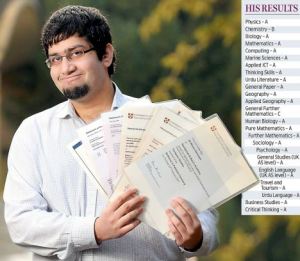
Scientists and Engineer | Photo : Moin Ali Nawazish making a World Record by passing 23 A level Exams
                   Air force :Air Commodore MM ALAM has a world record of shoting down 5 Indian planes in less than a Minute 


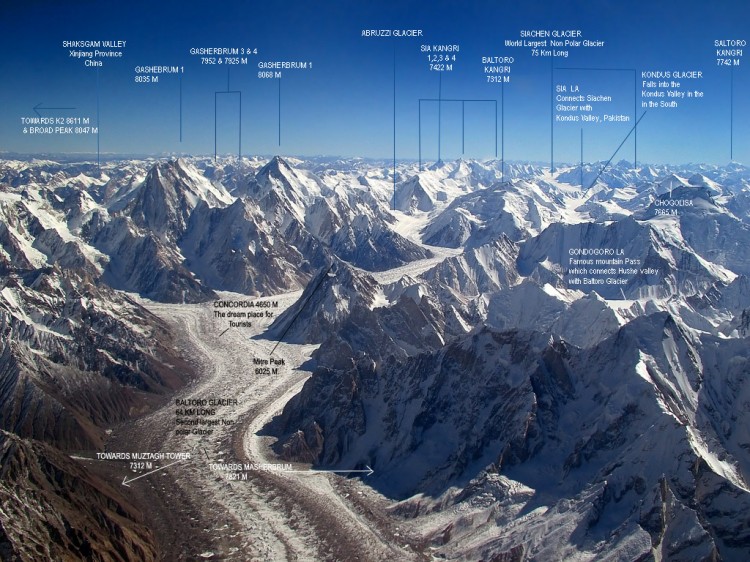
Pakistan: Karakoram Highway World's highest paved international Road


Water War Between Pakistan And India


A peaceful and stable Pakistan is integral to western efforts to pacify Afghanistan, but Islamabad’s obsessions with its giant eastern neighbor may render such issues moot.
Since partition in 1947, Pakistan and India have fought four armed conflicts, in 1947, 1965, 1971 (which led to the establishment of Bangladesh, formerly East Pakistan) and the 1999 Kargil clash.Image
With the exception of the 1971 conflict, which involved rising tensions in East Pakistan, the others have all involved issues arising from control of Kashmir.
But now a rising new element of discord threatens to precipitate a new armed clash between southern Asia’s two nuclear powers – water.
Lahore’s “The Nation’ newspaper on Sunday published an editorial entitled, “War with India inevitable: Nizami,” the newspaper’s Editor-in-Chief and Nazaria-i-Pakistan Trust Chairman, Majid Nizami, asked his fellow citizens to prepare for a war with India over water issues. Nizami told those attending the “Pakistan-India relations; Our rulers- new wishes” session at Aiwan-e-Karkunan Tehrik-e-Pakistan, which he chaired, “Indian hostilities and conspiracies against the country will never end until she is taught a lesson.”
While The Nation is a conservative daily, part of the Nawa-i-Waqt publishing group, with a circulation of roughly 20,000, it has a website, and what’s more, close ties to Pakistan’s highest military circles, so Nizami’s comments should hardly be rejected out of hand.
Furthermore, Niazmi’s audience included some high ranking Pakistani officials, including Nazaria-i-Pakistan Vice Chairman Dr Rafique Ahmed; Pakistan Movement Workers-Trust Chairman, retired Colonel  Jamshed Ahmed Tareen; former Foreign Secretary Shamshad Ahmed Khan; Jamiat Ulema-e-Pakistan Secretary General Qari Zawar Bahadur; retired Air Marshall Khurished Anwar Mirza; retired Brigadier Hamid Saeed Akhtar and Jamaat-e-Islami Lahore Chief Ameer-ul-Azeem, among others.
At issue are Pakistan’s concerns over India’s ongoing construction of two hydroelectric dams on the upper reaches of the Indus River. Islamabad is concerned that the 45 megawatt, 190-foot tall Nimoo-Bazgo concrete dam 44 megawatt Chutak hydroelectric power project will reduce the Indus River’s flow towards Pakistan, as they are capable of storing up to 4.23 billion cubic feet of water, violating the terms of the bilateral 1960 Indus Water Treaty. The Indus, which begins in Indian-controlled Kashmir, is crucial to both India and Pakistan, but is currently experiencing water flows down 30 percent from its normal levels. The Indus is Pakistan’s primary freshwater source, on which 90 percent of its agriculture depends. According to a number of Pakistani agriculture and water experts, the nation is heading towards a massive water shortage in the next couple of years due to insufficient water management practices and storage capacity, which will be exacerbated by the twin Indian hydroelectric projects, as they will further diminish the Indus’ flow.
So, if push comes to shove, who’s got Pakistan’s back?
China.
During the Boao Forum for Asia, on China’s southern Hainan island on 1 April, Pakistan and China agreed to support each other “in all circumstances” and vowed to uphold their sovereignty and territorial integrity at all costs. Pakistani Prime Minister Syed Yousuf Raza Gilani told Chinese Executive Vice Premier Li Keqiang, “China’s friend is our friend, and China’s enemy is ours,” adding Pakistan considers China’s security as its own security and supports China’s position on Taiwan, Tibet and Xinqiang. Li replied that China would support Pakistan’s sovereignty and territorial integrity in every situation, telling Gilani, “No matter what changes take place at international level, we will uphold Pakistan’s sovereignty and territorial integrity.”
It might be noted here that in October 1962, coinciding with the Cuban missile crisis, India and China fought a brief but bitter war along their disputed Himalayan border.
Fifty years later, China and India have yet to resolve their border issues over Kashmir and China continues to claim most of India’s Arunachal Pradesh to the base of the Himalayas in the absence of any definitive treaty delineating the border. Kashmir remains the site of the world’s largest and most militarized territorial dispute with portions under the de facto administration of China (Aksai Chin), India (Jammu and Kashmir), and Pakistan (Azad Kashmir and Northern Areas).
No guesses therefore as to whom Beijing might back should Pakistani-Indian tensions continue to rise.
Accordingly, to keep the peace, one might paraphrase Ronald Reagan in Berlin – “Prime Minister Singh, tear down those dams!”
But don’t bet on it.